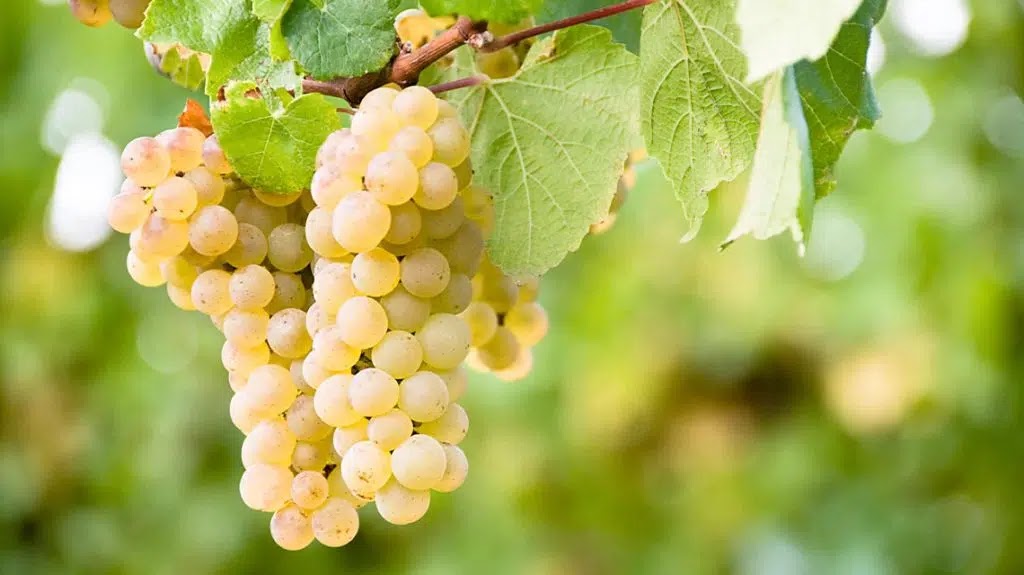
what's in your glass: Sauvignon Blanc

Let's talk about sauvy b, one of the world's most popular and planted grapes! It is literally planted everywhere from Old World to New World, from France to New Zealand, but what I love most about this grape is how it takes on the region's terroir and climate making different and unique hallmark styles multiple regions can call their own.
Here are some fun facts about our favourite zippy white wine:
• Originated in France, with Bordeaux, Loire Valley, and Southern France all claiming as its original home.
• Name comes from the two French words "sauvage" (wild) and "blanc" (white).
• 8th most planted wine grape.
• Produces dry (crisp and refreshing) to dessert (blended) wines.
• Primary Notes: Grass/Herbaceous | Gooseberry | Grapefruit | Honeydew | White Peach
• Structure: Lighter Body | No Tannin | High Acidity | Medium Alcohol (11.5-13.5%)
• Can be Oak Aged, Ex. Pouilly-Fume (Loire Valley) and Fume Blanc (California)
• Serving: Temperature 7-10° in a White Wine Glass
• Most Area Under Vine: France | New Zealand | Chile | South Africa
• International Sauvignon Blanc Day is the first Friday in May
• One of the parents of Cabernet Sauvignon, the other is Cabernet Franc
• Pairs well with A LOT of dishes (herbaceous, green, sushi, fish, etc.)
Some examples of Sauvignon Blanc from across different regions:
2023 Brander Vineyards La Presa Vineyard, Los Olivos District, California, USA
2023 Alain Gueneau La Guiberte, Sancerre, Loire Valley, France
2021 Comm.G.B.Burlotto Viridis, Langhe, Piemonte, Italy
Domaine Didier Dagueneau Blanc etc... Pouilly Fume, Loire Valley, France
2021 Clement Lavallee "Les Copaines d'Abord", Saint Bris, Bourgogne, France
2008 Vie di Romans Vieris, Friuli Isonzo Rive Alte, Italy

Comments

Popular posts from this blog

let's taste - Tasting 101 with IWEG & Wines of Germany

Whether you are a professional taster, tasting for fun, or (my favourite) an "educational drinker"; wine tasting is a vital aspect of the world of wine. There are many reasons why we taste including, but not limited to, determining regional/varietal hallmarks, assessing and judging, putting together food and wine pairings, and throughout the vinification process. Let's break it down further... DEFINITION: THE EVALUATION THROUGH SIGHT, OLFACTORY, AND PALATE TO DETERMINE FLAVOURS/AROMAS AND CHARACTERISTICS OF THE WINE IN QUESTION There are 4 major aspects when tasting wine, the visual, olfactory, palate, and conclusions.  VISUAL: What do you see? Wine style, colour intensity, aging, and potential alcohol/ripeness of grape.  OLFACTORY: What do you smell? Intensity, fruit or earth/mineral driven, and oak use.  PALATE: What do you taste? The wine's structure (acid, alcohol, tannin, body), fruit/earth/mineral notes, oak usage, and sweetness level. CONCLUSIONS: What is ...

Welcome to Weekend Winedown

  Hi, I'm Rebecca, a 30-something wino living in Toronto. Over the past 3 years I have gone from a curious wine drinker to taking individual wine classes to becoming a certified Sommelier through CAPS (Canadian Association of Professional Sommeliers) and a FWS (French Wine Scholar) through IWEG and The Wine Scholar Guild. To say the journey was hard would be a complete understatement; I spent countless hours making notes, memorizing flash cards, pulling all nighters studying, and attempting to blind taste hundreds, if not thousands, of wines correctly, however, looking back I wouldn't change a thing. The past couple of years have really shown me if I want something and put my mind to it, I can do it. Which is, besides my love and passion for wine, a huge reason why I continue to put myself through these intensive courses year after year. I am starting Weekend Winedown to share my love and passion for wine with a broader audience, with hopes of sparking some interesting conversa...